
Our olive oil
Taste olive oil where it is made, and get to know the craft of making it.
At Wild Camp you sleep among the olive trees whose oil you then find on your plate in our little kitchen – and which you can take home for yourself and your loved ones in 0.75 l, 3 l and 5 l.
- Tastings at the producer
- On your plateAt our dinners on the panoramic terrace
- To take homeIn 0.75 l, 3 l and 5 l
- Shipping on requestWe are happy to ship the 0.75 l bottle. Just ask about packaging and shipping costs using the form below.
Con l’olio ed il sale, si fa buono anche uno stivale.
With a little oil and salt, even a boot tastes good.
The olive grove
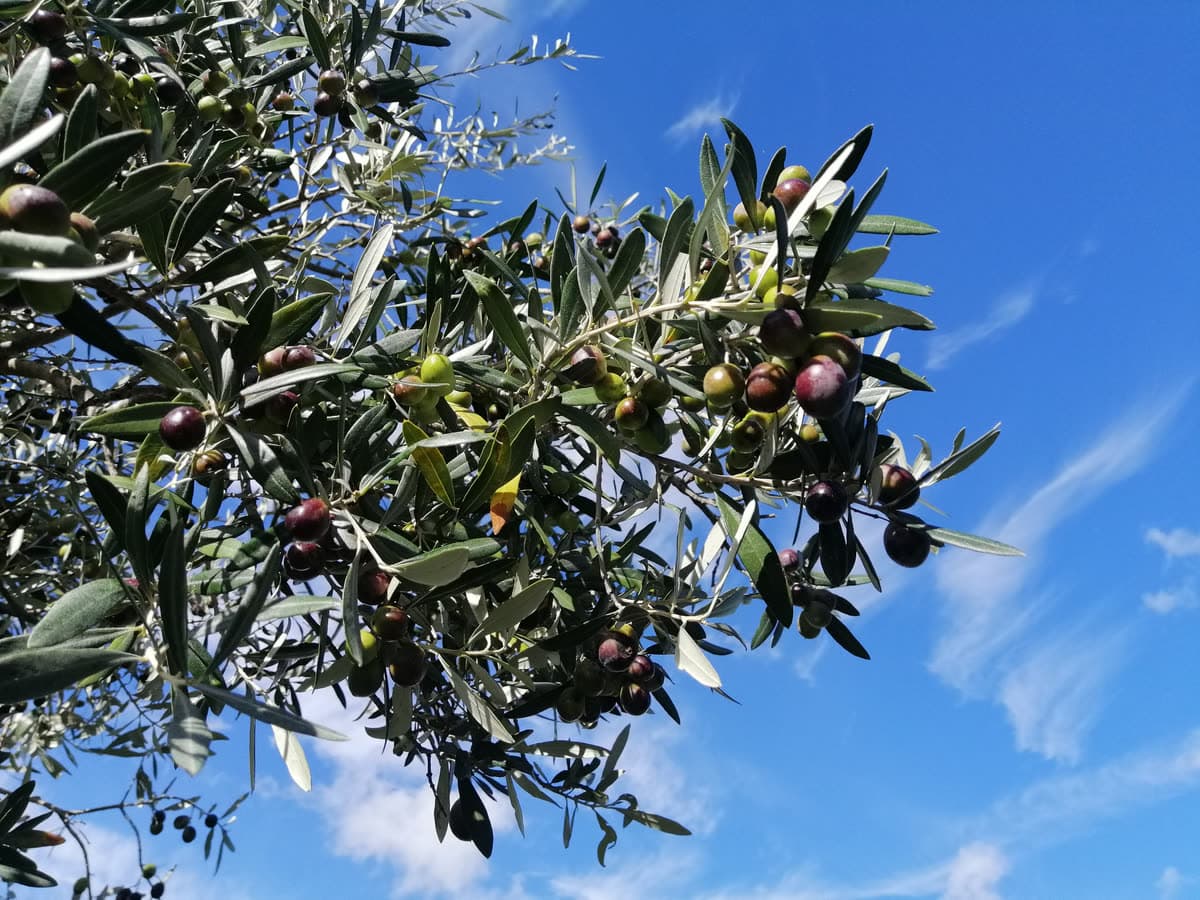
The Wild Camp olive grove, with its 1,000 trees in the heart of the Tuscan Maremma, is in an exceptional location.
The land lies at 250 m, about 30 km inland as the crow flies, yet the lie of the land lets the mild sea air reach our olive trees and shape their growth. The olives ripen earlier, and frost damage to the trees is somewhat less likely.
The main variety in our grove is Moraiolo. It is typical of Tuscany, grows slowly, ripens late and is resistant to pests. This variety is known for a particularly flavourful oil.
The harvest
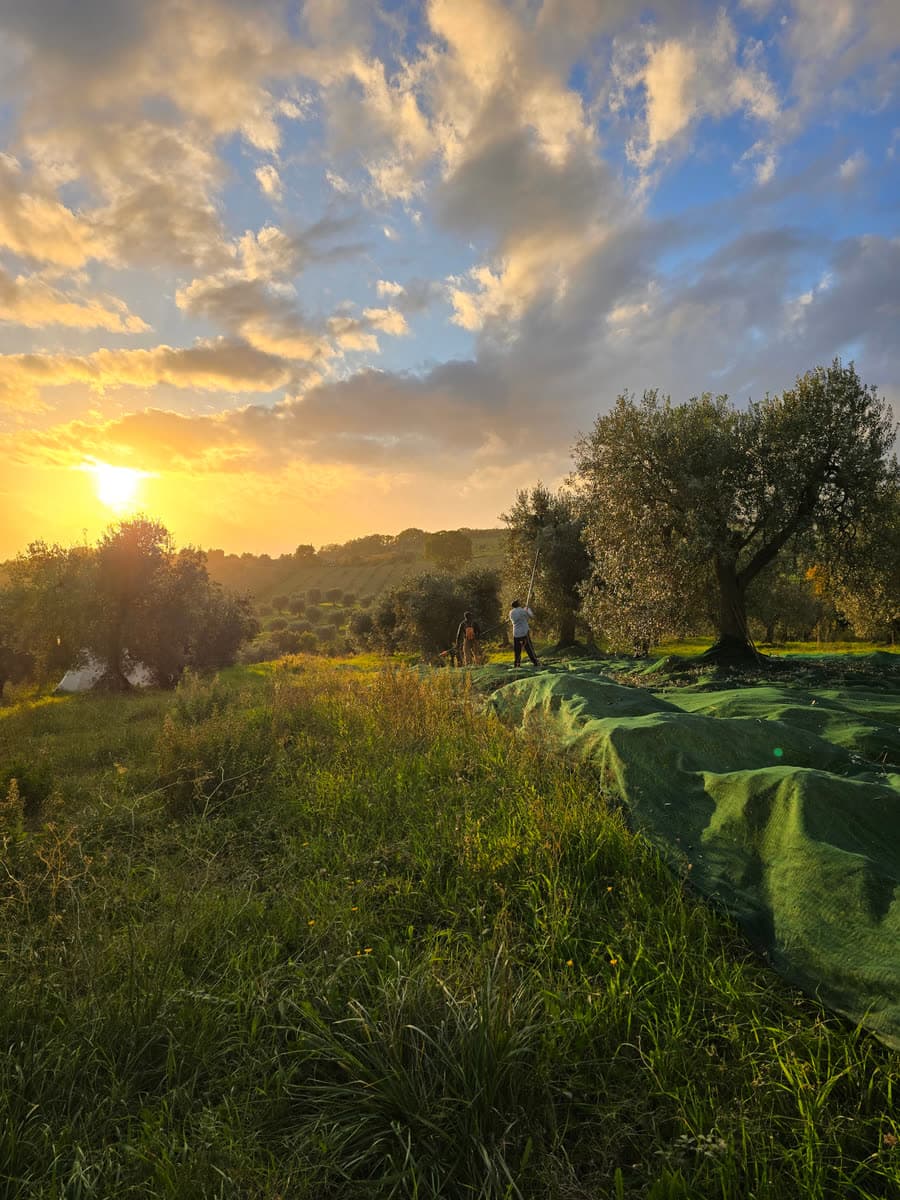
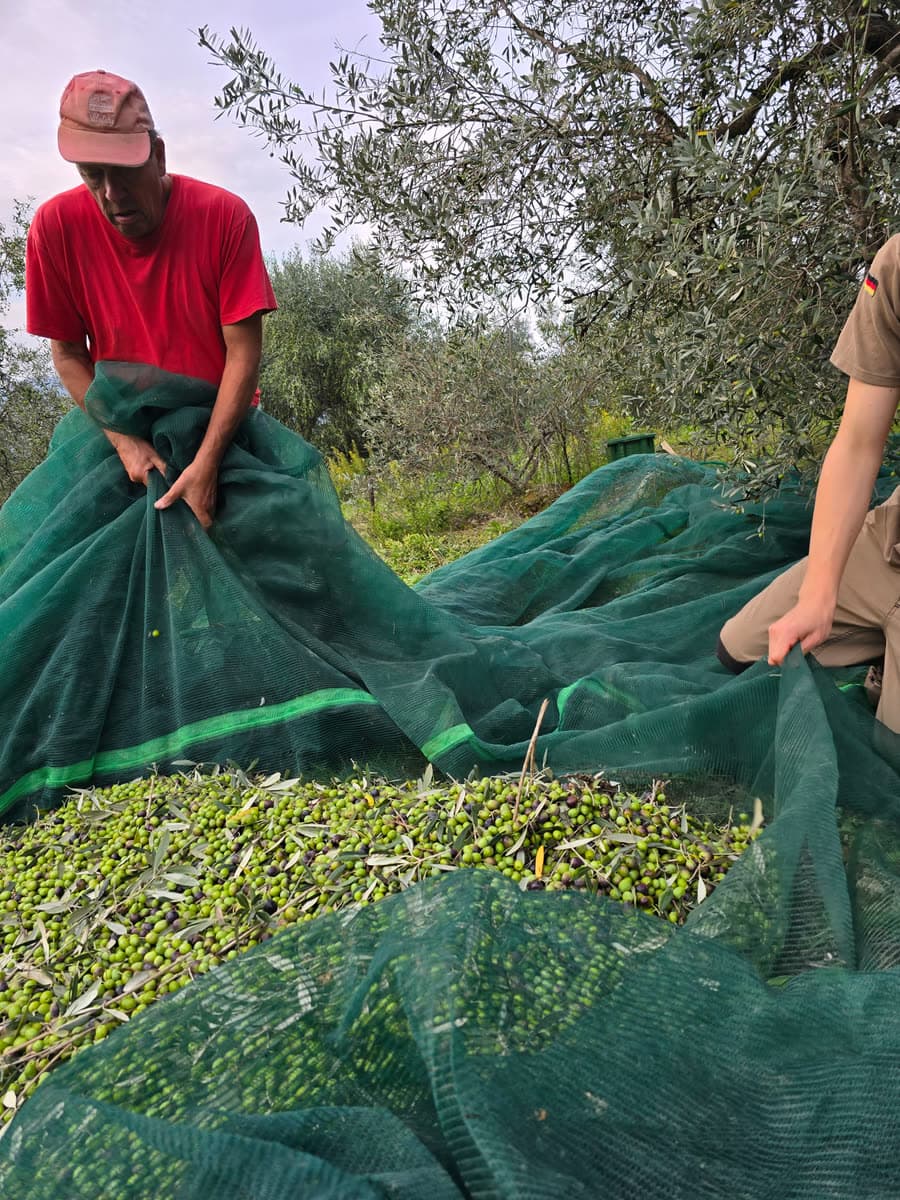
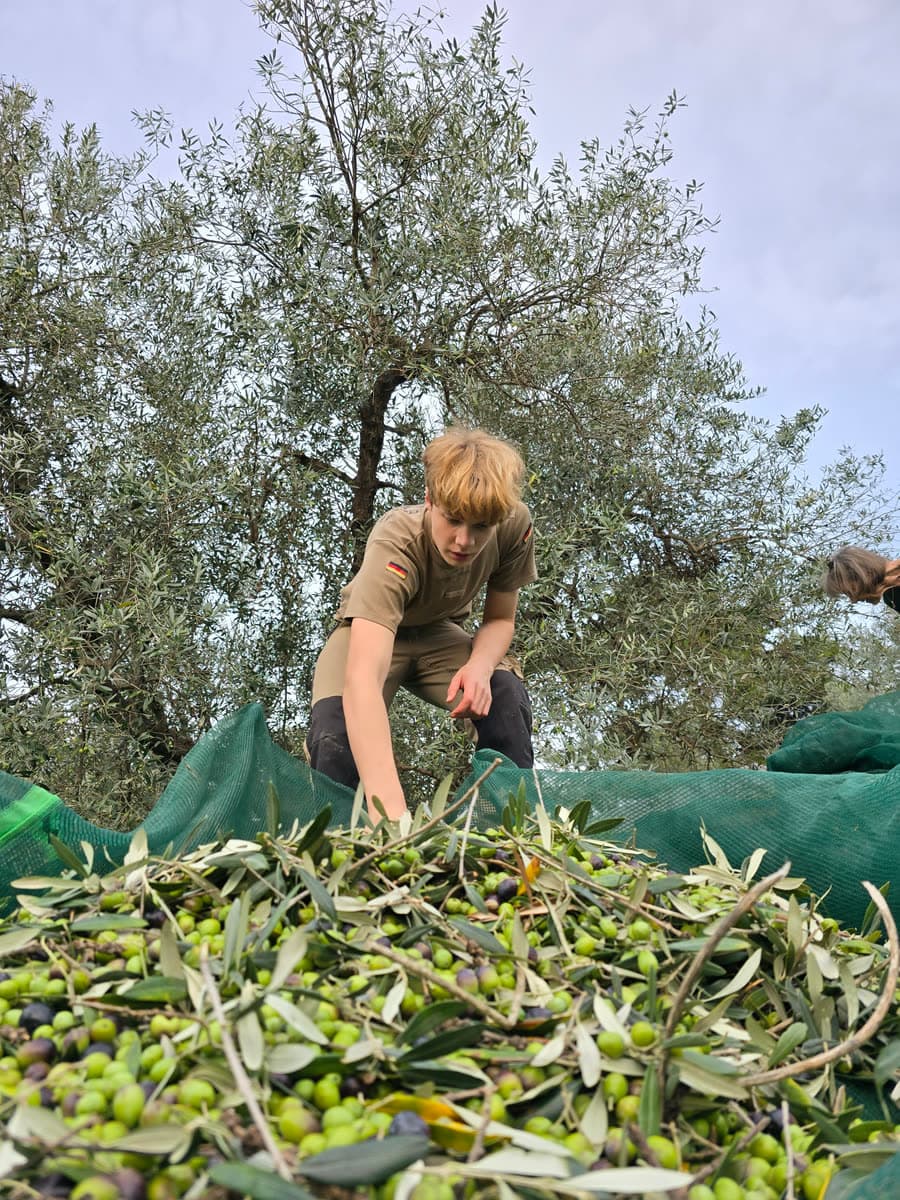
From the second week of October – always depending on the climate, the terrain and the state of the trees – the olive harvest, done entirely by hand, can begin, and it can last into December.
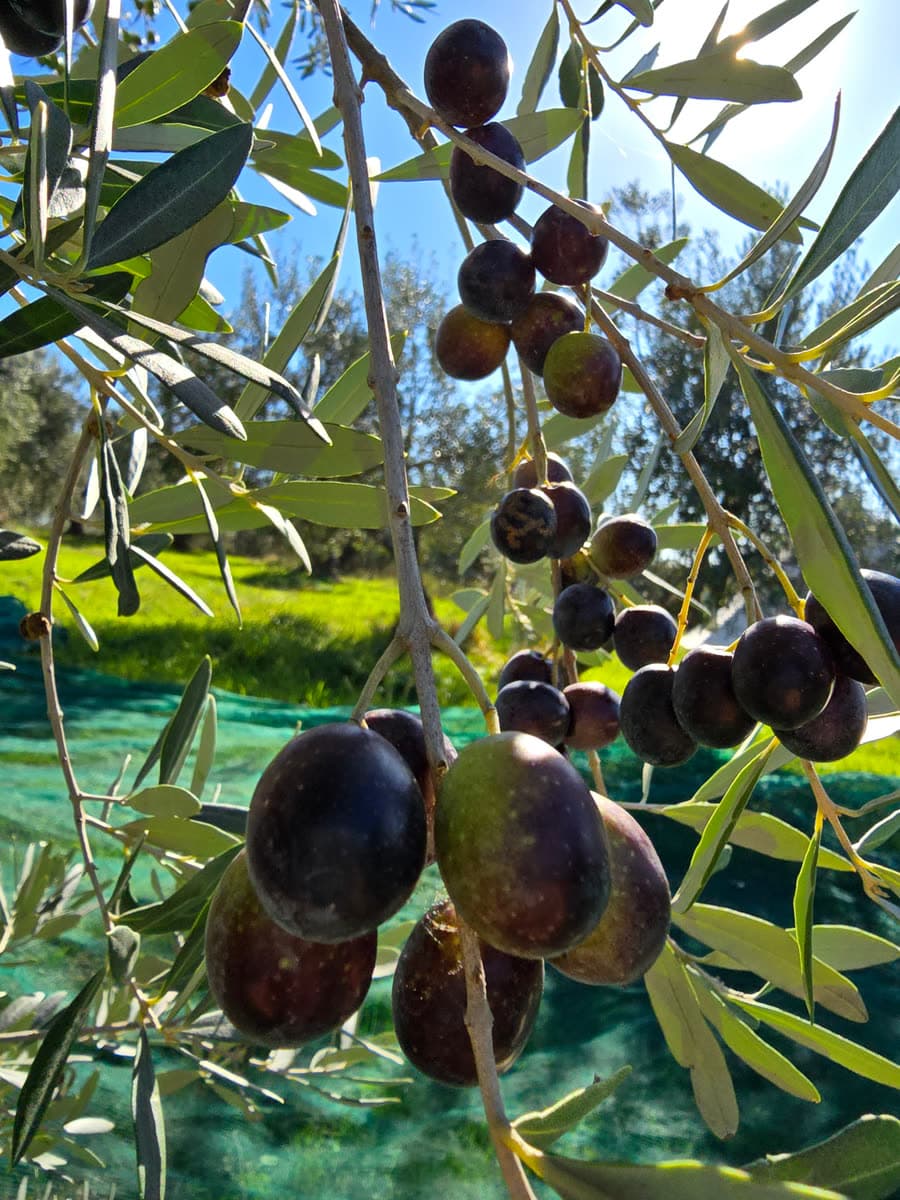
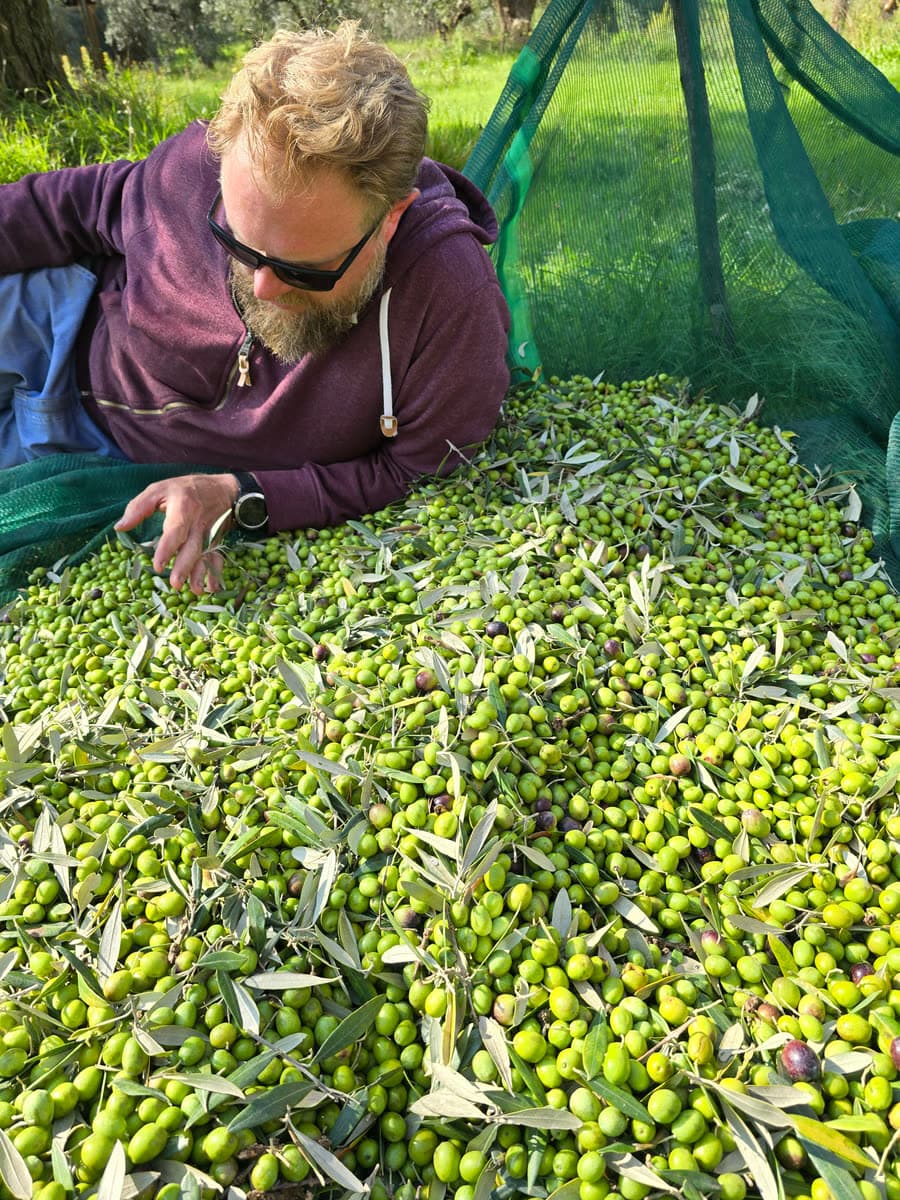
Particular attention has to be paid to the best moment to pick the fruit. The olives change colour from green to purple and finally to black, which shows how ripe they are. The ideal moment is shortly before the olives are fully ripe: the concentration of polyphenols is especially high in fruit that has not quite ripened.
Young olives do yield noticeably less oil than their riper companions, but with extra virgin olive oil it is, after all, the quality of the product that counts.
Cold-pressed within a few hours
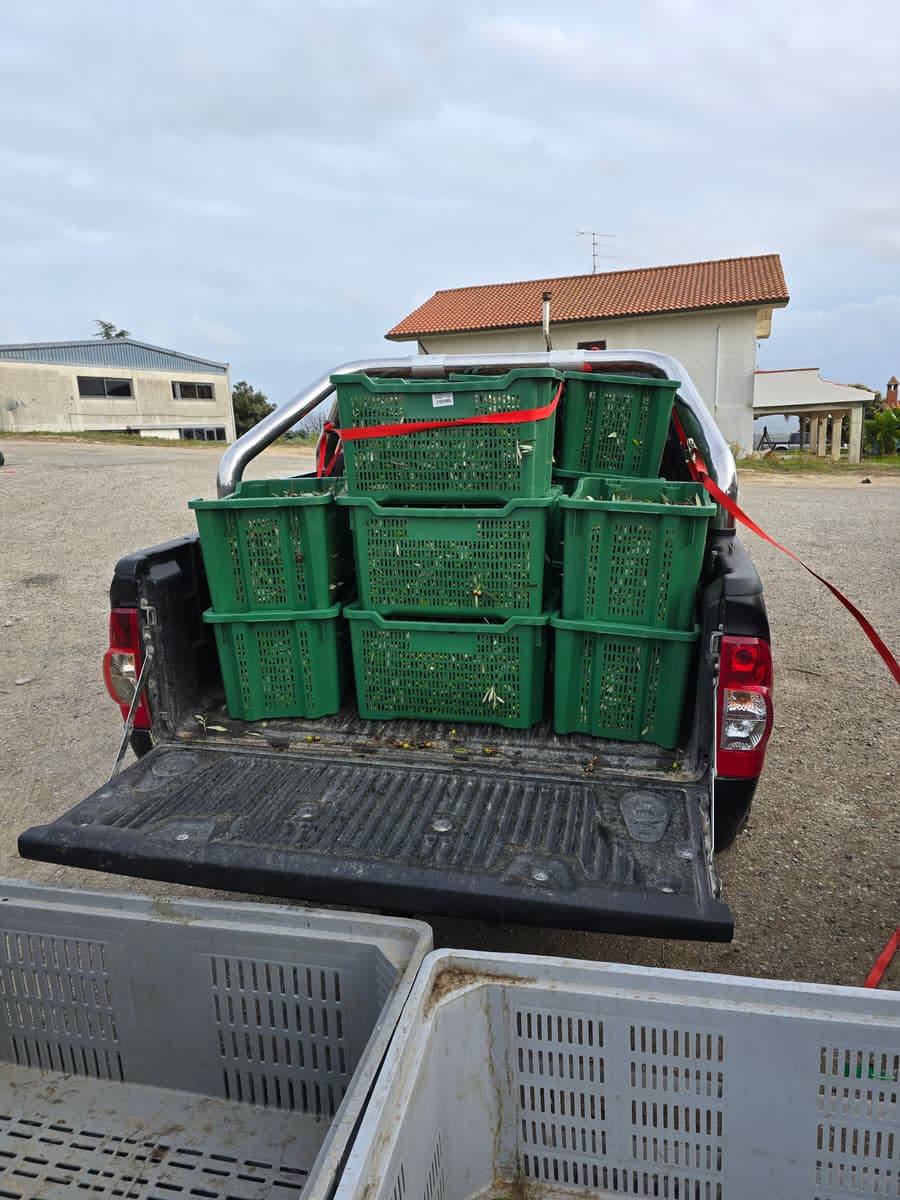
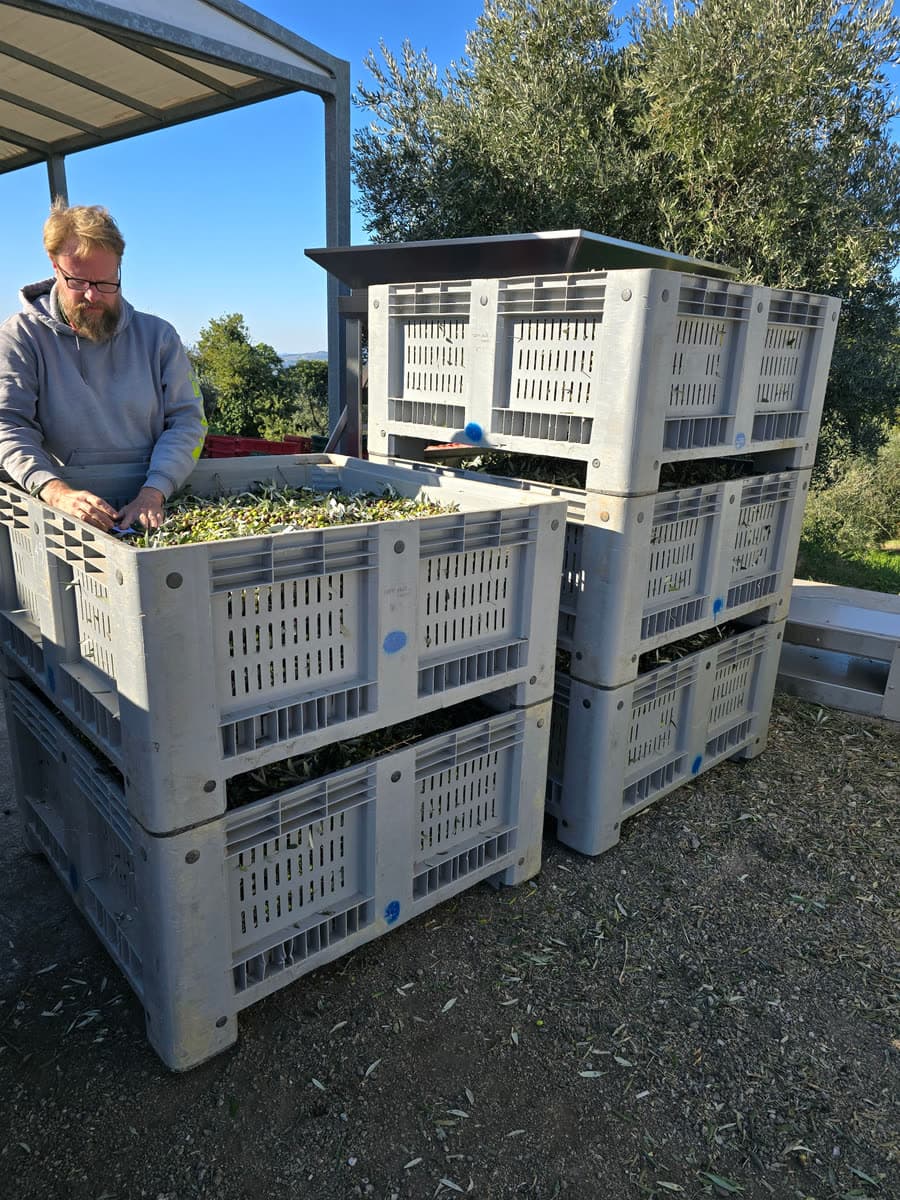
To obtain a high-quality extra virgin olive oil, no more than 24 hours may pass between picking and the mechanical cold pressing of the olives. That is why we take our olives to the mill as soon as possible after the harvest, so that only a few hours pass between picking and milling.
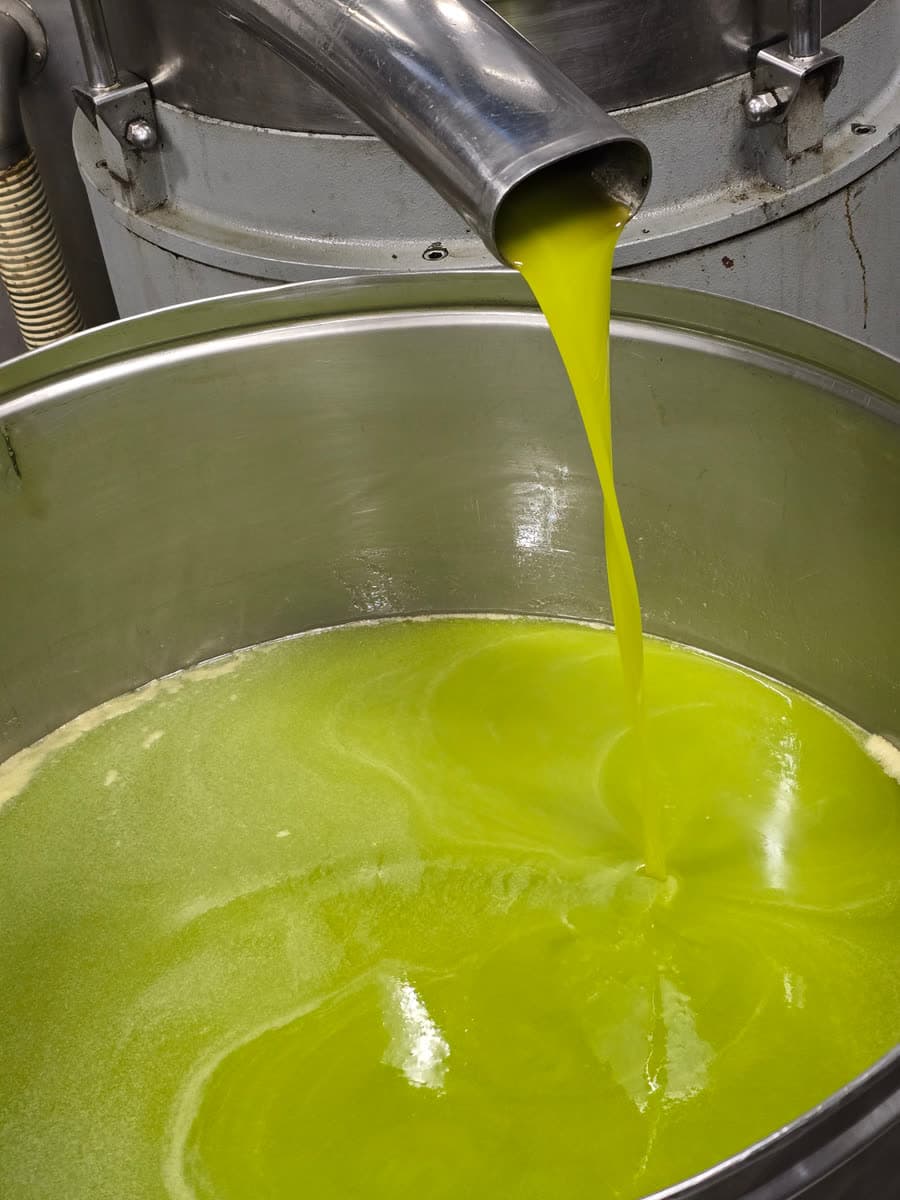
At the mill the fruit is cold-pressed by machine. During this cold extraction the temperature must not exceed 27 degrees.
The result is our olio extra vergine, with a high polyphenol content, a perfectly balanced flavour between spicy and bitter, and an intense golden-green colour.
The oil goes wonderfully with any kind of salad, fish, grilled meat and vegetables, and with fresh cheese – and it enriches any soup “a fine cottura” (at the end of cooking) and turns a slice of toasted white bread into a treat.
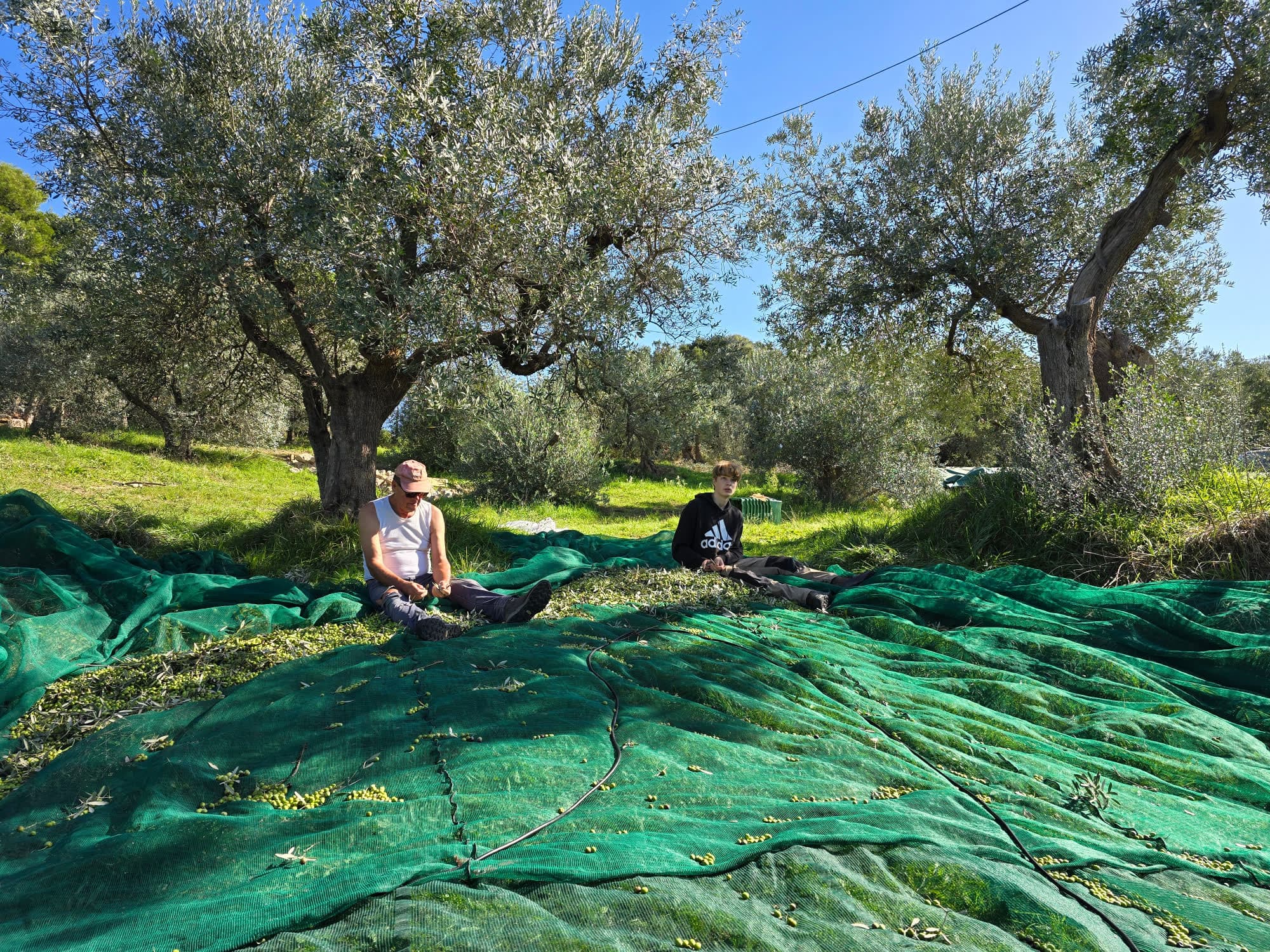
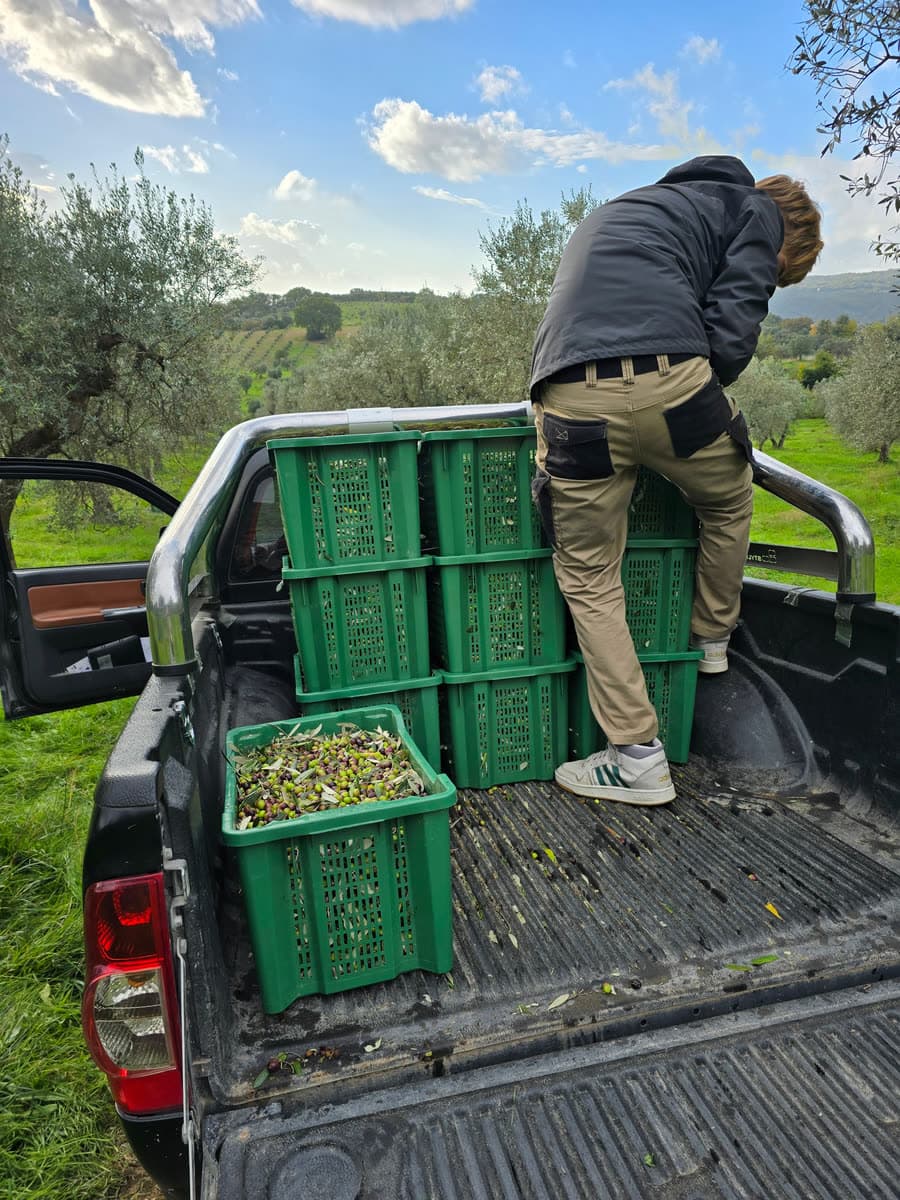
Harvested by hand
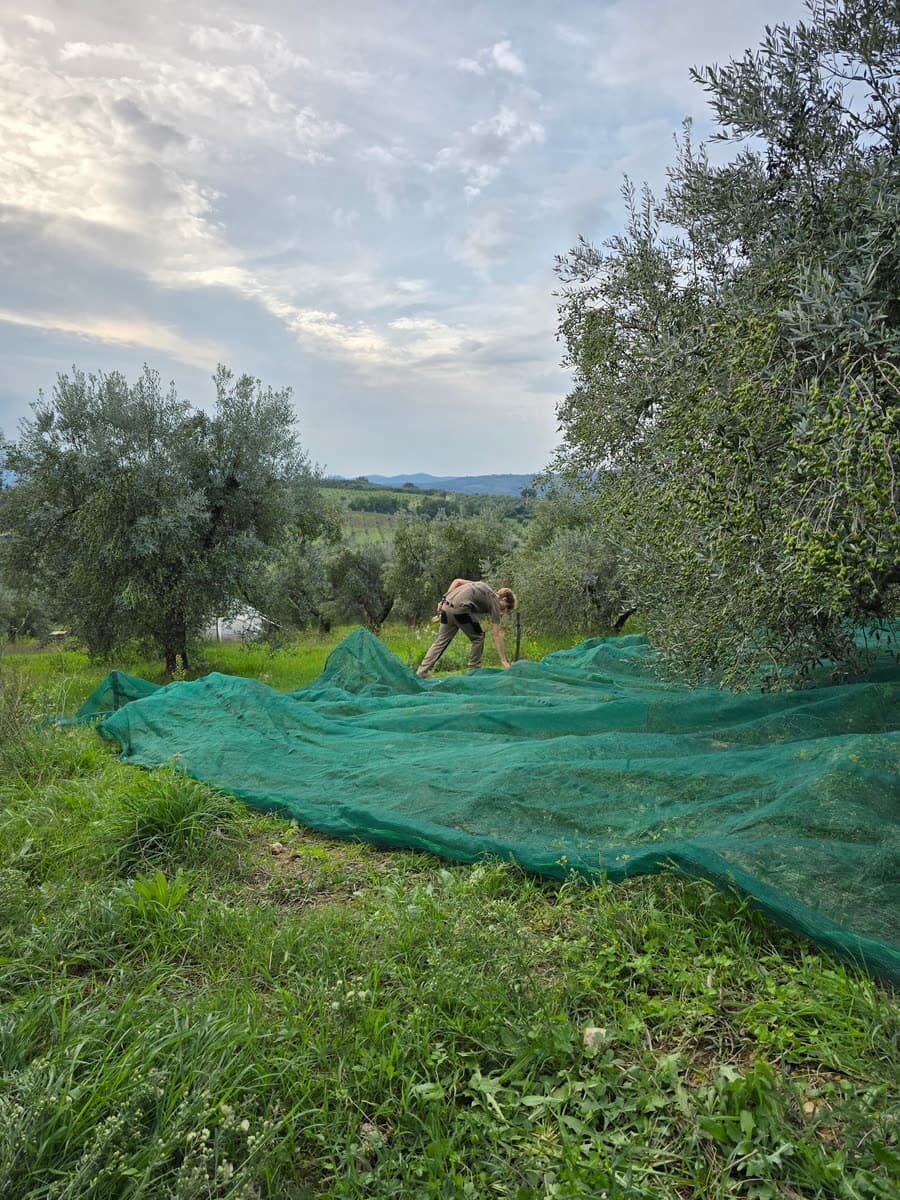
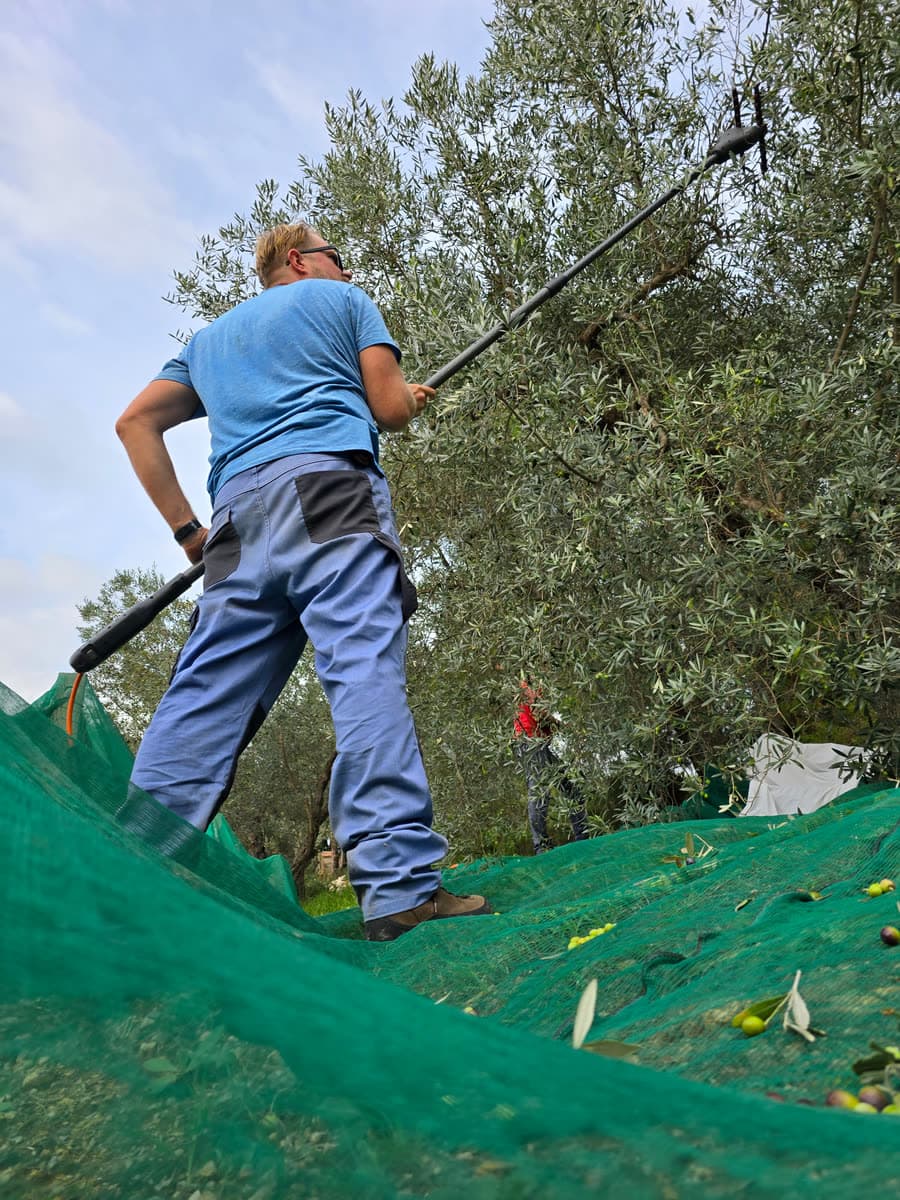
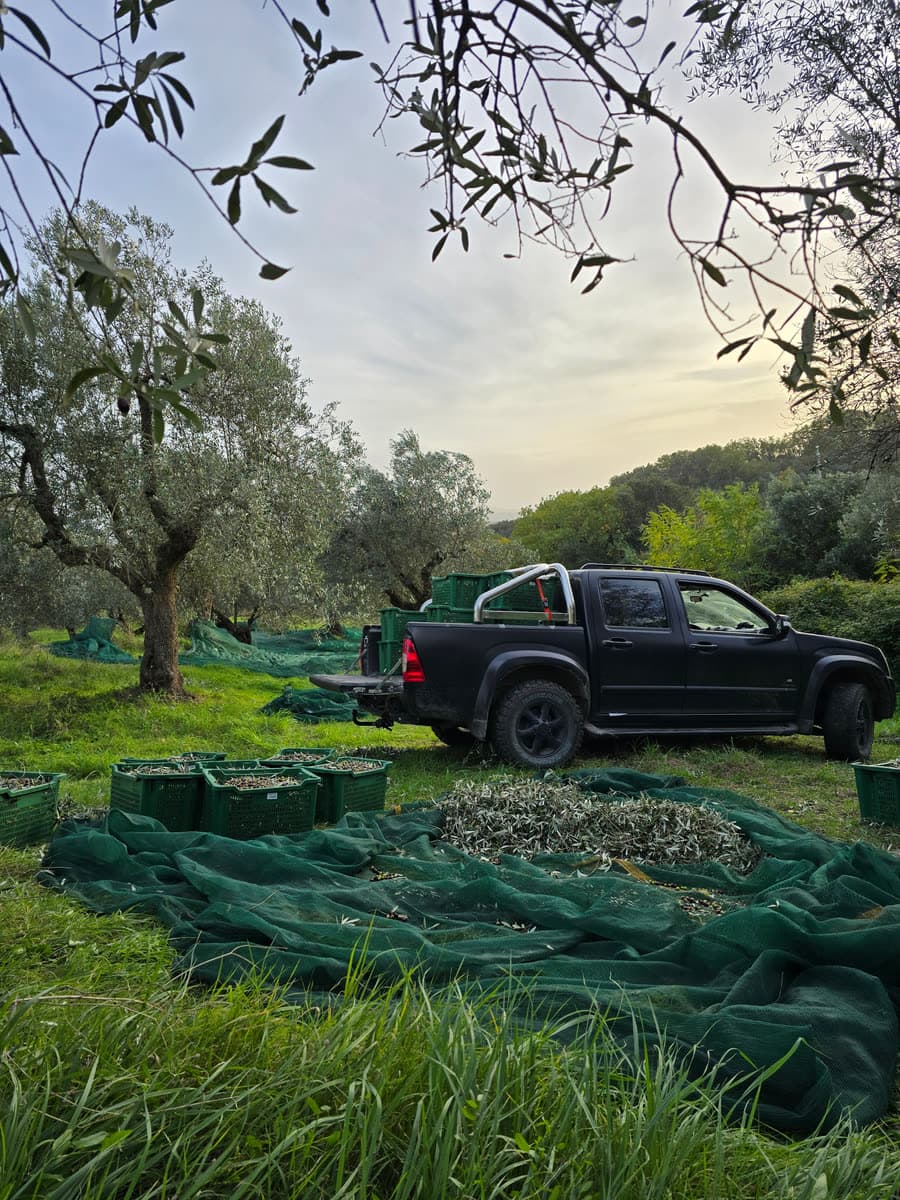
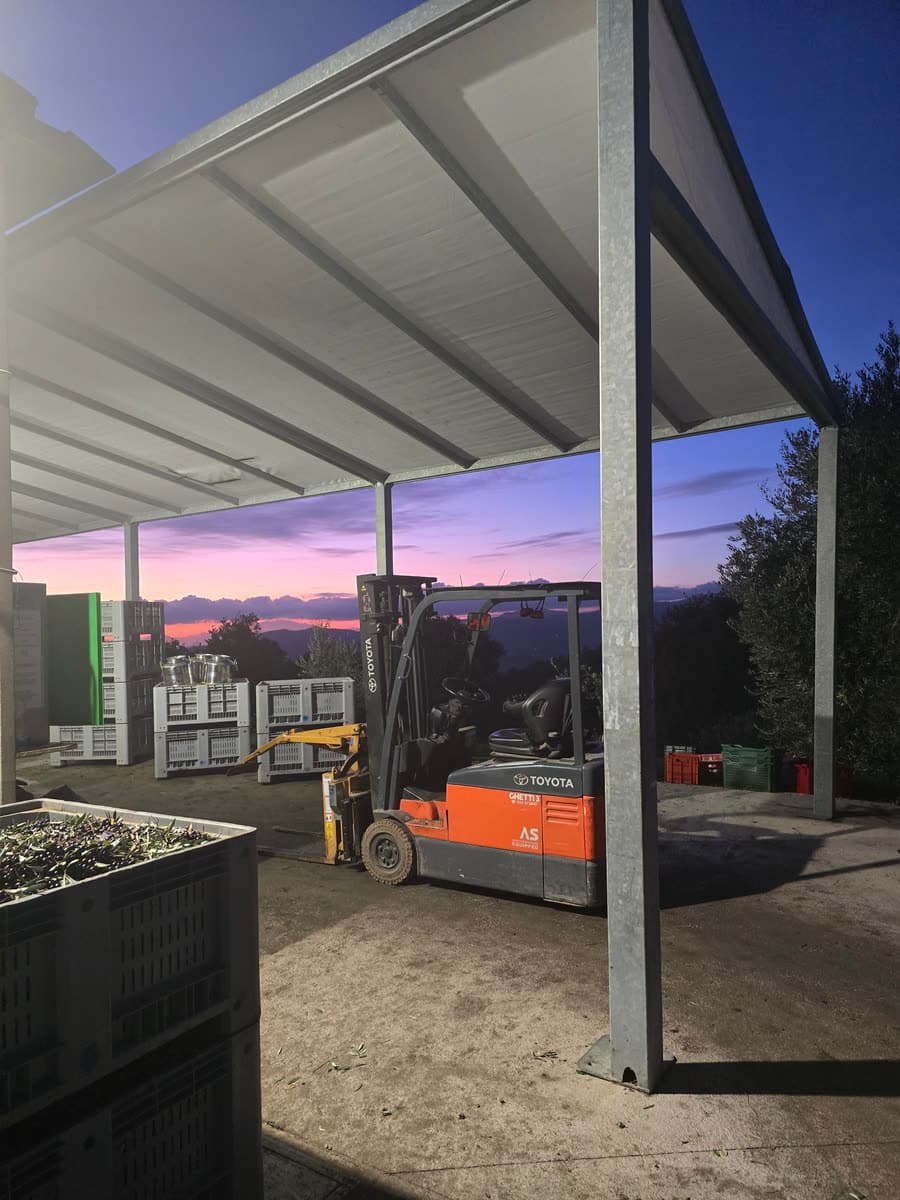
Nets under the trees, crates on the pickup and off to the mill the same day – this is what our harvest looks like, from the second week of October into December.
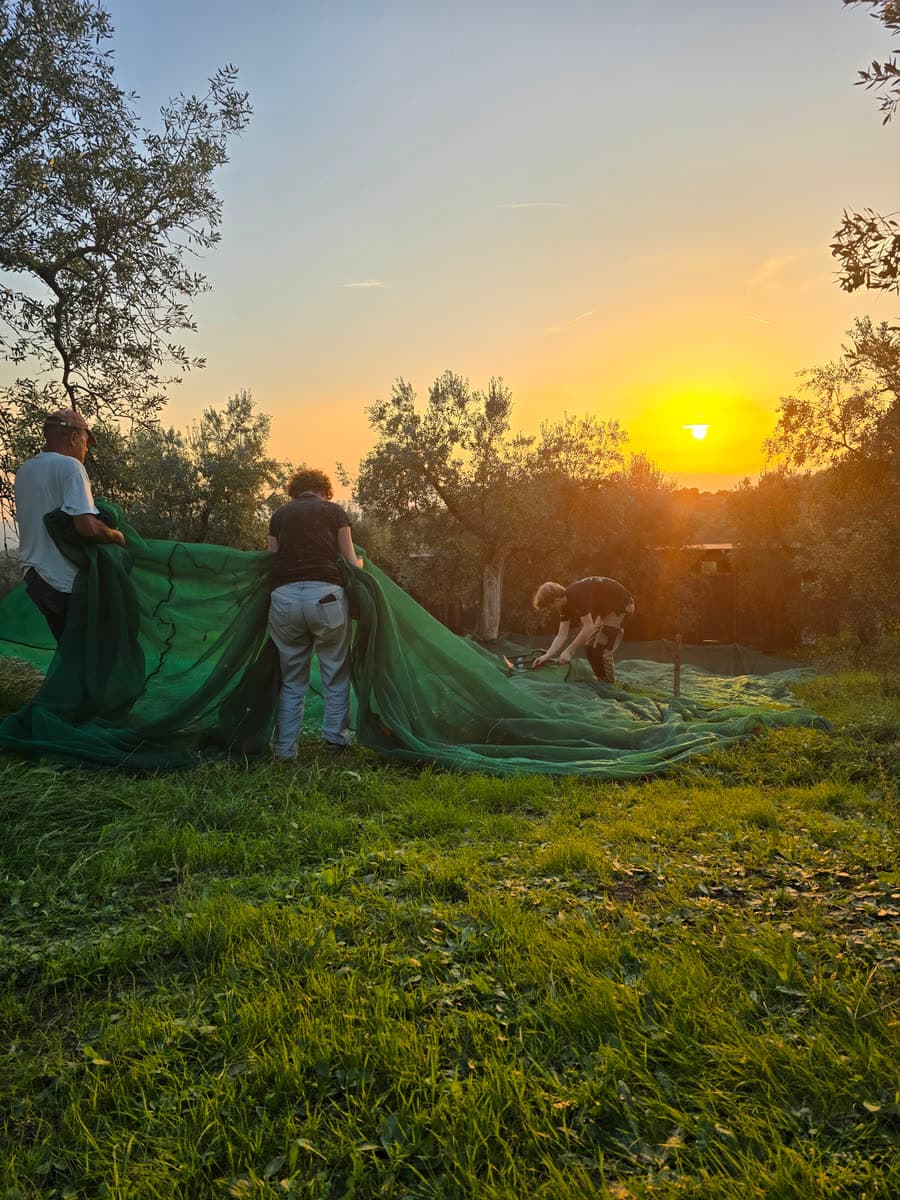
A flipbook of an olive harvest
From the ripe branch to the fresh oil, in sixteen pictures.
A year in the life of an olive tree
Winter
Like the grapevine, the olive tree rests in winter. With the sap largely withdrawn, this is the time for the “potatura”, the pruning of the tree. On the one hand, it frees the trees of the water shoots that sap their strength.
On the other, it gives the olive trees their characteristic vase shape (vaso policonico), with branches hanging down on the outside and an airy centre. This cut lets the sunlight reach the inside of the tree and also makes the harvest in autumn easier.
Spring
To strengthen the olive tree, it is a good idea to feed it before the new growth – in our grove exclusively with natural fertiliser. That means animal manure, spread by hand under the trees and worked into the soil.
The olive blossoms – again depending on the variety, the terrain and the climate – in the lovely month of May. The weather during this time plays a huge part in a good harvest. Because the flowers of the olive tree are pollinated by the wind, you hope for little rain and a steady but not too strong wind once the blossoms have opened.
Summer
From mid-June the blossom sheds its petals and the young fruit remains on the tree.
While it grows, the trees have to be watched closely so that an infestation by one of the olive’s worst pests is spotted early. The “mosca olearia” – the olive fly – pierces the olives to lay its eggs. Special pheromone traps, which lure the flies with scent, are hung up to prevent damage to the fruit.
Autumn
From October you can watch the olives ripen. Their colour changes from green through purple to black. After waiting for just the right moment, the most exciting step begins: the harvest!
You hope not only for a rich harvest but also for a high yield – how much oil per 100 kg of olives will end up in the stainless-steel tanks after pressing. Both, as you might expect, depend directly on the weather during flowering, while the fruit sets and – last but not least – while the olive grows. Every harvest is a surprise.
Polyphenols
Polyphenols are counted among the secondary plant compounds. They protect the oil from going rancid.
Their content is highest in strongly green, fruity oils. A mark of quality in an olive oil rich in polyphenols is the bitterness and the peppery catch you feel in your throat in the finish.
Olio extra vergine – extra virgin olive oil
Only an olive oil obtained from fresh olives solely by mechanical means, cold, at no more than 27 degrees Celsius and without the use of chemicals may be called “extra virgin” (also “extra virgen” or “extra vergine”).
Olio extra vergine is the highest quality grade of olive oil.
Ask about our olive oil
Tell us which size you would like – 0.75 l, 3 l or 5 l – and how much. We can also ship the 0.75 l bottle; we will let you know the shipping costs.